

The platform alone does not determine whether an online store works. Ecommerce website development in Ghana can use a hosted platform such as Shopify, a content management system such as WordPress with WooCommerce, or a custom-built system. The right foundation depends on your catalogue, payment and delivery processes, and plans for growth.
Choosing a platform is an important decision, but it is only one part of building a store customers can use with confidence. The design, mobile experience, product pages, and day-to-day management all shape how easily people can browse and buy.
This guide explains how platform options differ, which features make an online store practical, and how responsive design, SEO, and maintenance fit into the build. It also covers how to assess a developer’s projects and testimonials, understand the factors that shape a project, and decide when professional development can help turn your plans into a workable online store.
Key Takeaways
- Assess your store’s catalogue, payment flow, and growth plans before choosing a platform.
- Prioritize mobile-friendly design, clear product information, and ongoing maintenance to support a dependable shopping experience.
- Use portfolio projects and client testimonials to understand a developer’s approach, process, and delivered work.
- Compare WooCommerce, Shopify, and custom development by how well each fits your store’s needs and management capacity.
Responsive design, SEO and website maintenance
Ghanaian shoppers may browse on phones, so start designing for a small screen. Test product images, menus, forms, and checkout on mobile before refining the desktop layout. A clear path from product page to payment makes shopping easier across devices.
An ecommerce website in Ghana should include readable product details, working search, clear delivery information, and payment options suited to its customers. Show stock status and order confirmation clearly, then test every step from browsing to purchase before launch.
A premium website design relies on more than decoration. Use consistent typography, purposeful spacing, and product photography that helps customers compare items. Keep each page focused, so the visual quality supports commerce rather than slowing the purchase journey.
- Compress large images to help pages load efficiently over the internet.
- Use descriptive page titles and product names to help search engines understand each page.
- Test links, forms, and checkout after changes to catch broken steps.
SEO starts with a logical structure: organize products into useful categories, write distinct descriptions, and make important pages easy to reach. Use relevant Ghanaian wording naturally, such as product terms and delivery information, rather than repeating keywords. Review search performance and update content as the catalogue changes.
Plan business administration alongside the store build. Ghana's VAT rate on taxable supplies remained 15% from 1 January 2026, according to the Ghana Revenue Authority. Ghana's 2026 fee schedule lists GHS 130 for initial registration of a business name, according to the Office of the Registrar of Companies. These are separate considerations from website design and development.
Running a store brings risks such as outdated software, broken checkout steps, unavailable pages, and inaccurate product information. Ongoing maintenance costs depend on hosting, domain renewal, software updates, and the time needed to resolve issues. Set a routine to update the catalogue, test checkout, review backups, and fix errors before they disrupt shopping.
Portfolio projects and client testimonials
A web development portfolio shows how a team turns requirements into a working site. Review project examples for product browsing, checkout, mobile layouts, and catalogue management. A polished homepage alone does not show whether the store’s key tasks work smoothly. Follow a customer journey from landing page to order completion and note any unclear steps.
Match each example to your project needs. A retailer with a large catalogue needs clear categories and search, while a small maker may need a simpler product presentation. Look for relevant functions, not just a similar colour palette. For Ghanaian commerce, check whether examples show how local payment and delivery needs shaped the project.
Testimonials add context to portfolio images. Look for specific details about communication, decisions, launch preparation, and later changes. A useful testimonial explains what the client needed, what the development team delivered, and how the finished site supported the business. Compare those details with your priorities instead of relying on praise without context.
- Compare a project’s stated goals with the functions shown in its finished store.
- Look for testimonials describing concrete work, such as catalogue setup or checkout improvements.
- Note whether project pages explain the client’s needs and delivered outcome.
Project timelines depend on scope and readiness. Product information, images, payment setup, delivery rules, and feedback all affect the sequence. A practical plan sets milestones for discovery, design, development, testing, and launch. Agree on who supplies each item and approves each milestone. Missing content or delayed decisions can hold up later work.
Before selecting an agency, write a short brief with your catalogue needs, essential functions, and launch priorities. Compare portfolio examples against that brief, then use testimonials to understand communication and delivery. If you’re shaping requirements for an online store, website project planning can help organize the work into clear stages.
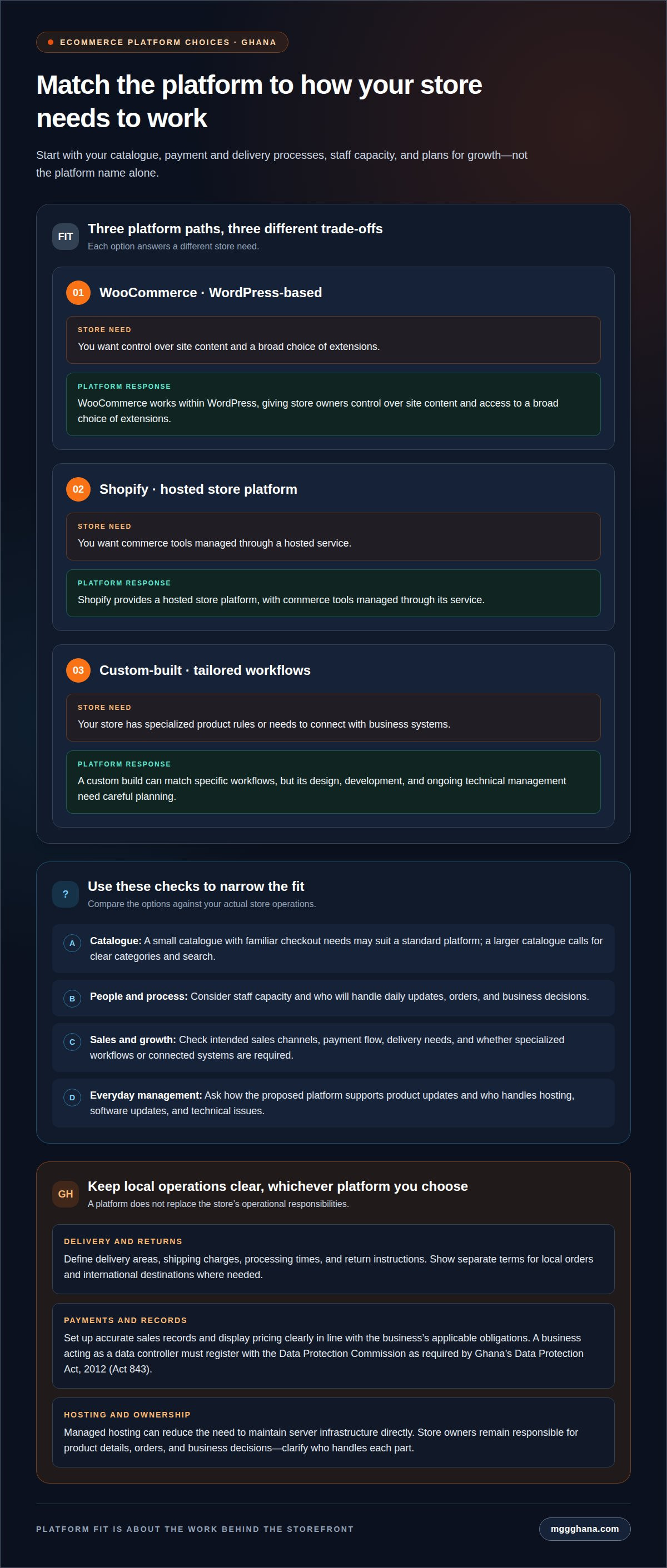
WooCommerce, Shopify, and custom-built platforms
Ghana’s Data Protection Act, 2012 (Act 843) requires a business acting as a data controller to register with the Data Protection Commission as required by the Act. For tax, set up accurate sales records and display pricing clearly in line with the business’s applicable obligations.
WooCommerce works within WordPress, giving store owners control over site content and a broad choice of extensions. Shopify provides a hosted store platform with commerce tools managed through its service. A custom-built platform can match specific workflows, but its design, development, and ongoing technical management need careful planning.
Compare these options against your catalogue, staff capacity, and intended sales channels. A small catalogue with familiar checkout needs may suit a standard platform. Stores with specialized product rules or connected business systems may need more customization. A developer should explain how the proposed platform supports daily updates, not just the initial launch.
Selling domestically and internationally requires clear destination settings. Define delivery areas, shipping charges, processing times, and the return process before customers reach checkout. For example, a store can show separate delivery terms for local orders and international destinations. Keep return instructions accessible after purchase, and use WhatsApp for customer questions only if your business can manage the channel consistently.
Managed hosting can reduce the need to maintain server infrastructure directly, while store owners remain responsible for product details, orders, and business decisions. Clarify who handles hosting, software updates, backups, and support requests. Cloud hosting is one option; the right arrangement depends on the platform and the store’s operating needs.
A customized website quote should reflect the actual scope, including catalogue setup, integrations, design requirements, content preparation, and hosting. Share a concise brief with required features and intended customers. That helps a developer define deliverables, exclusions, and project stages without relying on a vague estimate. Before committing, organize your store platform requirements into a practical scope.
Website development technologies and content management systems
A content management system (CMS) lets staff update products, pages, and promotions without rebuilding the site. WordPress is one example: its administration area manages content, while themes shape page presentation. For an online store, the CMS should make routine catalogue changes clear and manageable.
Technology choices work together. HTML structures product pages, CSS controls their layout, and JavaScript can support interactive features such as filters. Server-side code and a database handle tasks such as storing product details and recording orders. Ask which parts your team can change after launch.
WooCommerce adds store functions to WordPress, while a custom application can be designed around particular workflows. The useful distinction is not “simple versus advanced.” It is whether the system fits your catalogue, order process, and staff skills without adding unnecessary complexity.
- Map how staff add products, update stock, and process orders.
- Identify integrations the store needs, such as payment or inventory systems.
- Ask how content and product data can be exported if the platform changes.
For search visibility, give each product a clear page structure, descriptive headings, and readable text. Consistent URLs and editable page titles help staff keep information useful as products change. Visitors also benefit when navigation labels match the categories they expect to find.
Test a complete purchase journey before launch. Add a product, change its details, place a test order, and review the resulting order record. Then check that the same tasks work on mobile. This practical test reveals whether the technology supports daily operations and a smooth path to purchase.
Choose a platform by weighing control, ease of maintenance, and the specific features your store needs. If connected workflows require a tailored foundation, plan a website system for your store around its catalogue and operating needs.
MGG Ghana - The Michaels Global Group: Professional online store development
MGG Ghana, The Michaels Global Group, helps businesses establish online stores through professional online store development. Turn to MGG Commerce when you need a structured build for product catalogues, store setup, and management.
Website design and development shapes the store’s pages and customer journey, while branding and graphic design give its visual identity a consistent foundation. If your operations need connected digital workflows, web applications and business systems can support those requirements.
Bring your catalogue requirements, preferred platform, and essential store functions into the project discussion. This gives the work a clear starting point and helps align the site with your business processes.
To discuss an online store project, contact MGG Ghana, The Michaels Global Group, or visit mggghana.com.
Set a clear direction for your online store
Your next step is to turn your business priorities into a defined project brief. Identify the customers you want to serve, the tasks your store must support, and the decisions your team needs to make before development begins. A clear brief gives ecommerce website development in Ghana a practical foundation, aligning platform and design choices with how your business intends to operate.
MGG Ghana, The Michaels Global Group, offers professional online store development, website design and development, and branding and graphic design. These capabilities can bring your store’s functions and visual identity together in one coherent digital presence.
Start by outlining your catalogue, essential store features, and preferred customer journey. Then discuss how those requirements can shape the project scope and direction.
Contact MGG Ghana to discuss your online store project and take the next step with clarity and purpose.
Frequently Asked Questions
What does ecommerce website development in Ghana cost?
The price depends on the project and is provided after a quote request. For ecommerce website development in Ghana, key cost factors include catalogue size, custom design, payment and inventory integrations, content preparation, and hosting needs. Define the required functions before requesting a quote. A store needing product filters and stock connections has a different scope from one requiring basic listings and checkout.
How long does it take to build an ecommerce website in Ghana?
The timeline depends on the project scope and how quickly essential materials are ready. Product descriptions, images, payment setup, and page layout decisions all affect progress. A useful first step is to prepare a complete catalogue and identify who will approve designs and content. Changes to requirements during development can also shift planned milestones.
Which ecommerce platforms are best for Ghanaian businesses?
The best platform is the one that fits your catalogue, operating process, and ability to manage the store. WordPress with WooCommerce can suit businesses seeking control over site content; Shopify offers a hosted store environment; custom development can address distinctive workflows. Compare how each option handles your products, staff tasks, and planned integrations before deciding.
How can a Ghanaian ecommerce website integrate MTN MoMo, Telecel Cash, and AT Money?
A website can offer these payment methods by connecting checkout to a payment service that supports them. The integration should present payment choices clearly, show the amount due, and return a result to the order process. Test successful, failed, and abandoned payments before launch, then reconcile website orders with payment records during regular store operations.
What should businesses look for when choosing a Ghana ecommerce developer?
Choose a developer whose work aligns with your store’s required functions, catalogue, and internal capacity. Look for relevant project examples and testimonials that describe delivered work and communication. Discuss ownership of content, access to the administration area, handover, and maintenance responsibilities. A Ghanaian business acting as a data controller must register with the Data Protection Commission as required by the Data Protection Act, 2012 (Act 843).
