

The cost of an online shop in Ghana depends on what it needs to do, not simply on the number of pages. For a product catalogue website in Ghana, the catalogue size, navigation, cart and checkout requirements, delivery rules, and stock tracking all shape the project scope. Pricing depends on the project and is provided after a quote request.
It’s reasonable to want a clear budget before committing, especially when a catalogue needs to do more than display products. This article explains which features influence online shop costs and how to assess the scope your business needs. You’ll see how catalogue structure, mobile browsing, payments, order management, delivery information, and stock updates fit together, helping you make an informed decision.
Key Takeaways
- Build your budget around the store’s functions and complexity, not page count alone; catalogue structure, checkout, and order workflows all affect scope.
- Plan categories, filters, and product details around how customers browse, so shoppers can find and understand items more easily.
- Map out payment, delivery, stock updates, and order communication to create a clearer buying and fulfilment process.
- When you’re ready to shape these requirements into an online store, MGG Ghana - The Michaels Global Group offers professional online store development.
Cart, order management, delivery rules and stock tracking
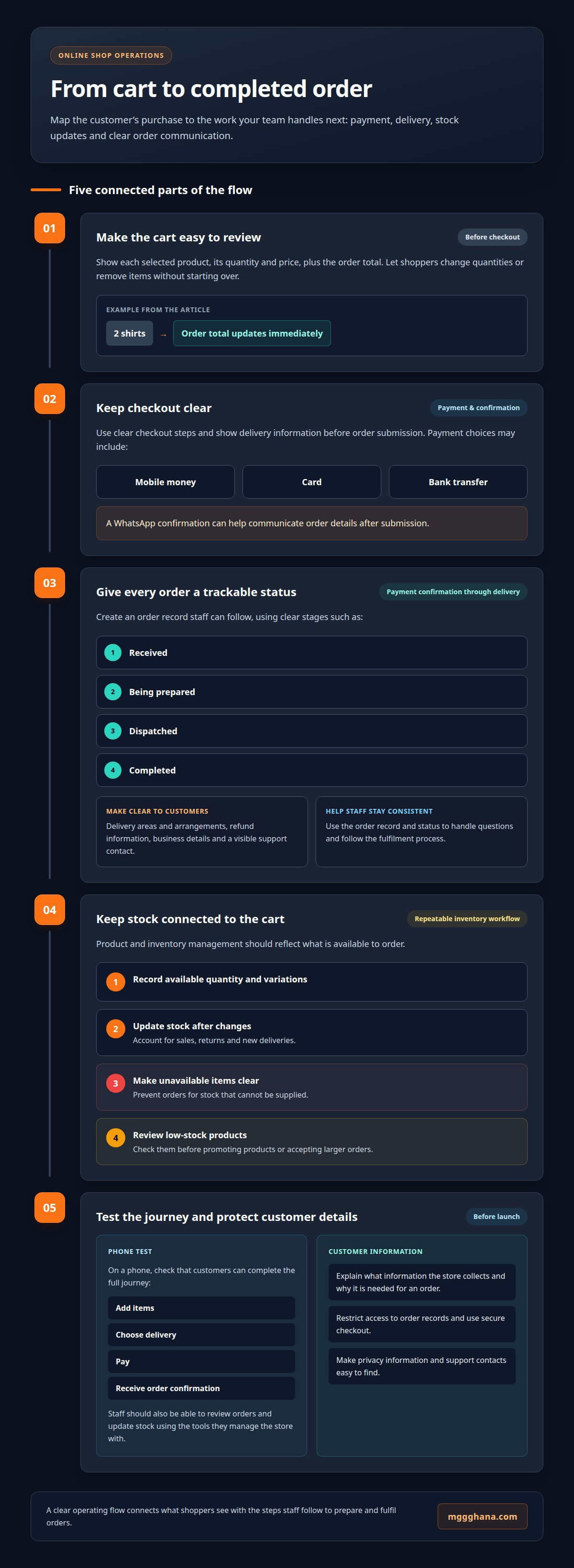
A useful cart shows each selected product, quantity, price, and order total before checkout. Let shoppers change quantities or remove items without starting over. For example, a customer ordering two shirts should see the total update immediately. Keep checkout steps clear, with payment choices such as mobile money, card, or bank transfer. A WhatsApp confirmation can help communicate order details after submission.
Order management should create a record staff can follow from payment confirmation through delivery. Set clear statuses, such as received, being prepared, dispatched, and completed. Publish delivery areas, arrangements, refund information, business details, and a visible support contact. This helps customers know what to expect after checkout and gives staff a consistent process for handling questions.
Stock tracking connects product and inventory management with the cart. Set up a repeatable workflow:
- Record each product’s available quantity and variations.
- Update stock after sales, returns, and new deliveries arrive.
- Show unavailable items clearly and prevent orders for stock that cannot be supplied.
- Review low-stock products before promoting them or accepting larger orders.
For mobile store management, test the full customer journey on a phone before launch. Check that customers can add items, choose delivery, pay, and receive order confirmation without switching devices. Staff should also be able to review orders and update stock using the tools they manage the store with.
For security and data protection, explain what customer information the store collects and why it is needed for an order. Restrict access to order records, use secure checkout, and make privacy information and support contacts easy to find. These steps give customers practical clarity about their details.
Cable management and conduits are part of the physical fulfilment setup, not the online catalogue itself. In a packing area, route power and network cables away from packing surfaces, and label connections used for printers or other equipment. An orderly workspace can support the separate process of preparing and dispatching orders.
Catalog filtering and navigation
Start with the words customers use to describe products, then turn those terms into categories. A clothing store might group items under Men, Women, and Children. Subcategories can separate shirts, trousers, and accessories without making visitors browse unrelated products. Keep category labels short and familiar. If shoppers need inside knowledge to understand a menu, rename it.
Filters help customers narrow a category using useful product attributes. For shoes, practical options might include size, colour, style, and price range. For electronics, visitors may value brand, capacity, and compatibility. Choose filters based on real differences in your inventory, not every available detail. A filter with no matching products frustrates customers, so test combinations against current listings.
- Map each product to one clear primary category.
- Use consistent attributes for comparable products, such as size or material.
- Check that sorting by price or newest products changes results correctly.
- Provide a clear way to remove filters and return to the full category.
Review mobile navigation separately. Open the store on a phone and test menus, search, filter controls, and product links. Make filters easy to tap, and keep the result count or selected options visible. If a customer selects “black” and “medium,” the page should show both choices clearly and let them remove either one.
Structure also affects search visibility. Duplicate category pages or thin product groupings can weaken relevance and create repetitive content. Give each category a distinct purpose, useful description, and consistent name. For a product catalogue website in Ghana, clear organization helps customers browse and search engines understand the store’s structure.
Review customer support questions for clues: repeated requests about sizing or materials may reveal missing filters or unclear labels. Align product imagery, naming, and category presentation through thoughtful brand and catalogue design, so visitors can recognize products and browse with confidence.
E-commerce functionality
A product catalogue website presents products, descriptions, and prices for browsing. An ecommerce website adds transactions, allowing customers to place orders through a cart and checkout. A catalogue can support enquiries without online purchasing, while ecommerce connects browsing to payment and order processing.
Plan each feature around the task it needs to support. For example, a customer viewing a phone should find its model details, price, availability, and product page. Make the page easy to share and find in search, so it can support social media campaigns and organic search.
For shoppers in Ghana, design the purchase flow for mobile screens. Menus, product details, cart actions, and checkout forms should be easy to use on a phone. Payment options may include mobile money, card payments, bank transfer, WhatsApp confirmation, or pay on delivery. Display delivery information and avoid unexpected costs or confusing forms before order submission.
- Use categories and consistent product data to make new listings easier to add.
- Set up inventory tracking so product availability reflects stock changes.
- Provide a support channel and clear policies for customer questions.
- Use analytics to review product views, checkout drop-offs, and campaign activity.
Useful commerce features depend on how the store operates. A small catalogue may need search, categories, related products, and reliable stock updates. A business managing frequent enquiries may also benefit from reviews, abandoned-cart follow-up, and a defined support workflow. Add functions that serve a clear customer or staff task instead of crowding the interface.
Before launch, test a complete purchase using a sample product. Check product details, payment choice, order confirmation, and delivery information on mobile and desktop. Then confirm staff can update listings and maintain consistent product information. Strong website design and development connect these functions in a straightforward customer journey.
Online shop and product catalogue pricing in Ghana
Online shop pricing in Ghana depends on the build’s scope, not just its page count. Pricing depends on the project and is provided after a quote request. Key factors include catalogue size, product variations, custom design, payment gateway needs, and inventory workflows. A store with a simple product display has different requirements from one that handles online orders and stock changes.
Separate development decisions from ongoing operating tasks. Prepare product names, descriptions, prices, and images before catalogue entry, for example. Decide who will maintain those details, update availability, and add categories. Also define which checkout and order tasks need to happen online. These choices help establish a practical project scope before development begins.
For business registration, distinguish the business from its website. Prepare the business identity and contact details to display, alongside clear product, delivery, returns, and privacy information. Formal business registration follows the process applicable to the business structure in Ghana.
To optimize a product catalogue website in Ghana for Google, use clear category names, distinct product descriptions, descriptive page titles, and consistent product information. Compress images appropriately and make product pages easy to browse on mobile. These steps help search engines understand each page and shoppers find relevant products.
Examples depend on the business model: a Ghanaian fashion retailer could organize clothing by garment type and size, while a food supplier could group products by category and package format. A furniture seller might show product dimensions and materials. In each case, useful titles, images, and descriptions help visitors compare items.
Before requesting a quote, list your catalogue structure, checkout needs, and update process. That outline gives the project a clear foundation. Plan your online store scope around the features your business needs to manage products and orders.
MGG Ghana - The Michaels Global Group: Professional online store development
MGG Ghana — The Michaels Global Group develops professional online stores for businesses ready to organize products, support online orders, and build a clearer digital sales process. Turn to its team when you need to connect catalogue planning with website design and development, rather than treating product listings as isolated pages.
For a growing catalogue, a coordinated store can bring product structure, customer journeys, and business workflows together. Branding and graphic design can help present products consistently, while web applications and business systems can support broader digital operations where relevant. Start with a clear outline of your products, how customers should order, and how your team will manage the store.
Contact MGG Ghana — The Michaels Global Group to discuss your online store, or visit mggghana.com.
Shape your store for its next stage
As you plan a product catalogue website in Ghana, consider how the store will grow alongside your business. Your initial structure should support your current products while leaving room for new categories, changing customer needs, and improved workflows. A thoughtful digital foundation helps your team make future improvements without losing sight of the customer experience.
MGG Ghana, The Michaels Global Group, supports this work through professional online store development, website design and development, and branding and graphic design. These capabilities bring store functions, visual identity, and customer-facing design together in a coordinated project shaped around your business goals.
Before taking the next step, write down what the store must help customers do and what your team needs to manage. This brief can guide a focused conversation about structure, design, and development, giving the project a practical starting point.
Contact MGG Ghana about your online store and take a considered step toward building your business online.
Frequently Asked Questions
How much does an online shop cost in Ghana?
There is no single price for every Ghanaian online shop. The project scope and requested functions shape the quote, which is provided after a quote request. Separate development decisions from ongoing expenses such as domain renewal, hosting, and payment gateway charges. Before planning, identify the sales process the shop must support and which ongoing costs your business will manage.
What is a product catalogue website in Ghana?
A product catalogue website in Ghana presents a business’s products online, with details shoppers can review. It can support enquiries without processing purchases on the site. For example, a supplier might display equipment and invite customers to request a quotation. If customers need to place and pay for orders online, the project also needs ecommerce functions.
Which Ghanaian companies build product catalogue websites?
MGG Ghana, The Michaels Global Group, develops online stores and supports product catalogue and store setup. Its website design and development work can shape the wider site around your catalogue. To prepare for a project discussion, bring a sample product list, explain how customers should enquire or order, and outline how your team will maintain product information.
How much does a product catalogue website cost in Ghana?
The cost depends on the project scope and is provided after a quote request. A catalogue focused on product presentation differs from one requiring custom page layouts, extensive product data, or integrated ordering. Prepare an outline of catalogue size, content readiness, and desired customer actions. These details help define a suitable scope without assuming every store needs the same build.
What features should a product catalogue website include?
Include the information shoppers need to compare products, such as clear names, descriptions, prices, images, and relevant options. For a furniture catalogue, dimensions and materials can help customers assess suitability. Add an enquiry route if visitors need tailored information before buying. Consistent product fields also help staff create listings and keep the catalogue coherent as it grows.
How can I build a product catalogue website in Ghana?
Begin by gathering product information in a structured document with consistent names, descriptions, images, and attributes. Group related items into categories, then decide whether customers will enquire, order, or pay online. Choose functions that suit that process, prepare the content, and test representative pages before launch. Assign someone to review listings and keep product information current for your Ghanaian catalogue site.

